Cheetah lifespan
The cheetah (Acinonyx jubatus) is a large cat and the fastest land animal. It has a tawny to creamy white or pale buff fur that is marked with evenly spaced, solid black spots. The head is small and rounded, with a short snout and black tear-like facial streaks.
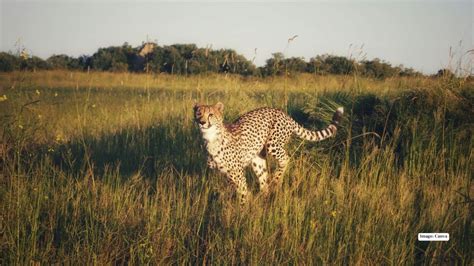 The cheetah is the world's fastest land animal and Africa's most endangered big cat.
 Cheetahs can go from 0 to 97 km/h (0 to 60 mph) in less than 3 seconds. [108] There are indirect ways to measure how fast a cheetah can run. One case is known of a cheetah that overtook a young male pronghorn. Cheetahs can overtake a running antelope with a 140 m (150 yd) head start.
The cheetah has lived in association with humans since at least 3000 bce, when the Sumerians depicted a leashed cheetah with a hood on its head. Cheetah, one of the world’s most-recognizable cats, known especially for its speed. Cheetahs’ sprints have been measured at a maximum of 114 km (71 miles) per hour, and they routinely reach velocities of 80–100 km per hour while pursuing prey. Nearly all cheetahs remaining in the wild live in Africa.
Fastest mammal on land, the cheetah can reach speeds of 60 or perhaps even 70 miles (97 or 113 kilometers) an hour over short distances. By the 1500s the popularity of the cheetah as a hunting companion rivaled that of the dog. Cheetahs, the most easily tamed of the big cats, were caught, tamed and trained. Adults were used because cubs had not learned how to hunt. Tamed cheetahs formed a strong bond with their keepers. Each cheetah rode to the hunt by horseback or on a cart.
Cheetah speed
The cheetah (Acinonyx jubatus) is a large cat native to Africa and central Iran. It is the fastest land animal, estimated to be capable of running at 80 to km/h (50 to 80 mph) with the fastest reliably recorded speeds being 93 and 98 km/h (58 and 61 mph). What do cheetahs eat
Learn about the evolution and migration of the species, its relationship with man throughout history, and its population and ranges. The evolution and history of the cheetah are just as remarkable and interesting as the species itself. Cheetah family
Learn about cheetahs from Cheetah Conservation Fund. CCF has the world's leading experts on cheetahs including our founder Dr. Laurie Marker. சிவிங்கிப்புலி - தமிழ் விக்கிப்பீடியா Cheetah is an Indian word, which means "spotted one". Among land animals, the cheetah is the fastest. It takes the animal only 3 seconds to accelerate from 0 to 100 km/h! The tail of a cheetah acts like a boat rudder, helping the animal to steer when running. Cheetahs use facial expressions to show their mood.biography of cheetah5 Cheetahs prey includes: gazelles (especially Thomson’s gazelles), impalas and other small to medium-sized antelopes, hares, birds, and rodents. Cheetahs will also prey on the calves of larger herd animals. Cheetahs generally prefer to prey upon wild species and avoid hunting domestic livestock.Cheetah - Facts, Diet, Habitat & Pictures on What is the cheetah? The cheetah is the world's fastest land mammal. With acceleration that would leave most automobiles in the dust, a cheetah can go from zero to 60 miles an hour in only three. 20 interesting facts about cheetahs
Get ready to meet one seriously fierce, fast and fur-ocious feline with these fascinating cheetah facts! 1) Nearly all wild cheetahs can be found in sub-Saharan Africa, where they roam open, grassy savannah plains and open forests. A small population lives in northeastern Iran, although only a few dozen remain here. Cheetah size
A cheetah (Acinonyx jubatus) is a medium large cat which lives in Africa and Asia. It is the fastest land animal and can run up to 75 miles ( km) per hour, and accelerate from 0 to 60 miles per hour in less than 3 seconds. Where do cheetahs live
The cheetah (Acinonyx jubatus) is a large cat and the fastest land animal. It has a tawny to creamy white or pale buff fur that is marked with evenly spaced, solid black spots. The head is small and rounded, with a short snout and black tear-like facial streaks.